
Once I had decided to visit Samarkand, the next question was how to continue westward toward the United States. Under the airline ticketing rules, I had only two practical choices: Poland or Türkiye.
Poland was tempting, but I want to spend a month exploring it someday, and that wouldn’t fit into this trip.
That left Türkiye, which offered some intriguing possibilities.
Göbekli Tepe
Göbekli Tepe has fascinated me ever since I first heard about it years ago. It has been on my “must visit” short list ever since. If I was going to Türkiye, there was simply no way I could pass up the opportunity. I would never forgive myself.
11,500 years ago! More than twice as old as Stonehenge and the Egyptian pyramids. Before draft animals, before the wheel. Somehow, people who were still hunter-gatherers managed to erect enormous stone pillars, intricately carved with images of animals. It’s a place that challenges some of our assumptions about the beginnings of civilization.
Who were these people? Why did they build it? And how did they accomplish something so extraordinary with only stone tools?
I’ve wanted to stand there and see it for myself.
Çatalhöyük
Çatalhöyük was also on my list of places I wanted to visit, although not on the short list. Since I was already going to Türkiye, this seemed like the perfect opportunity to visit both.
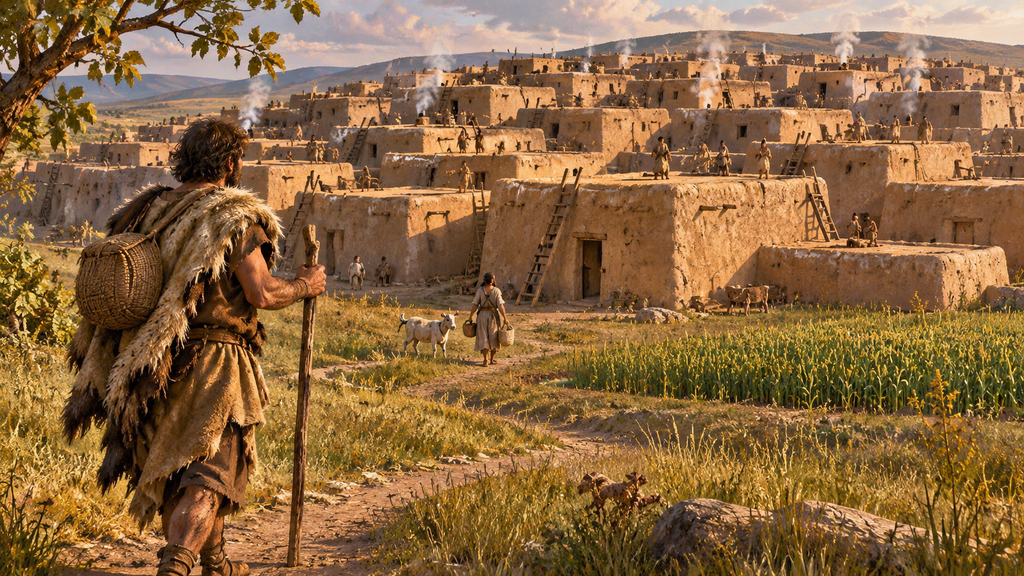
Dating back roughly 9,000 years—before the invention of streets!
Imagine an entire community of thousands of people living in houses packed tightly together, with no streets between them. People walked across the rooftops and entered their homes through holes in the roofs. What an extraordinary way to live! I’d love to see how they made it work.
Unlike Göbekli Tepe, which raises questions about the origins of monumental architecture and ritual, Çatalhöyük offers a glimpse into the beginnings of settled community life.
Petra
And finally, Petra.
I’ve wanted to visit this ancient city ever since I first learned about it. Roughly contemporary with Pompeii, Petra flourished in the middle of the desert, yet somehow had an abundant supply of water. How did they manage that?
Like Angkor Wat in Cambodia and Khajuraho in India, both of which I’ve loved visiting, Petra was totally forgotten by the outside world for centuries. (But the local people knew it was there all along.)
I discovered that I could add Jordan to my itinerary at very little additional cost. How could I possibly pass that up?
What began as a journey to Samarkand and the Silk Road had now expanded to include three more extraordinary places spanning thousands of years of human history.